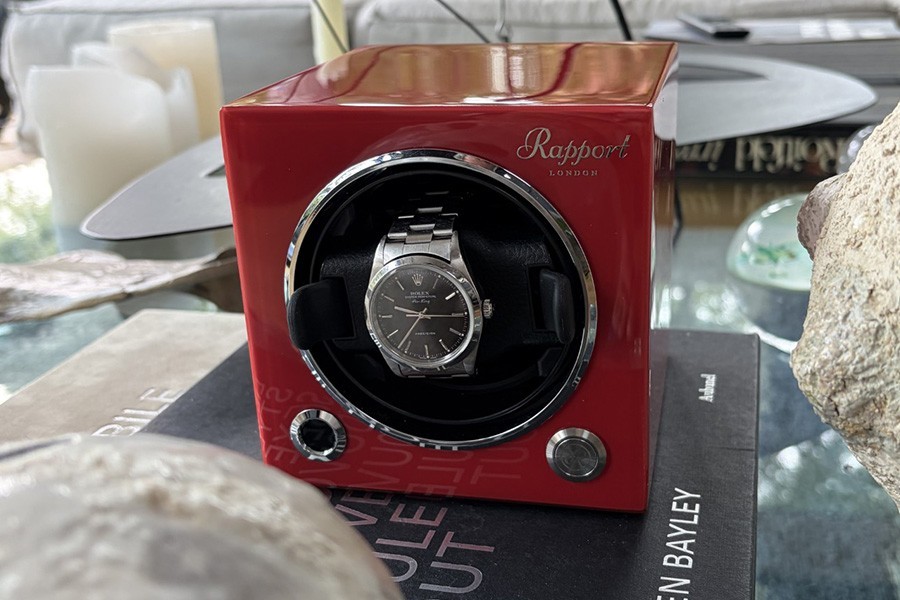


How to fit a NATO strap: step-by-step video guide

Remove a metal bracelet and fit a NATO strap in minutes. Full guide with workshop videos: Bergeon 6767F tool, Rolex GMT-Master and dive watch. Spring bars included with every order.
Updated 3 November 2026
Fitting a NATO strap needs no tool if the spring bars are already in place on your watch. A tool is only useful to remove the original strap. Fitting then takes two minutes, by hand.
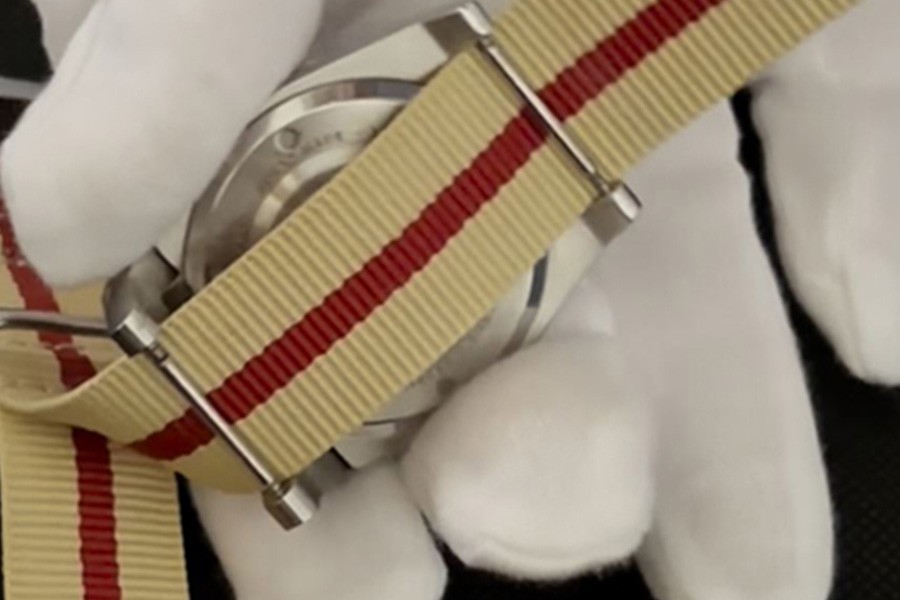
Its pass-through design — a single piece of nylon running under the case — simply calls for a precise method: the tip of the long section passes under both bars, then through the ring of the short flap, which locks the case.
This guide covers the fitting step by step, first on a Rolex GMT-Master then on a dive watch, illustrated by our own workshop videos.
Our full selection: NATO straps, available in 18, 19, 20, 21, 22 and 24 mm.
Before you start: removing the strap in place
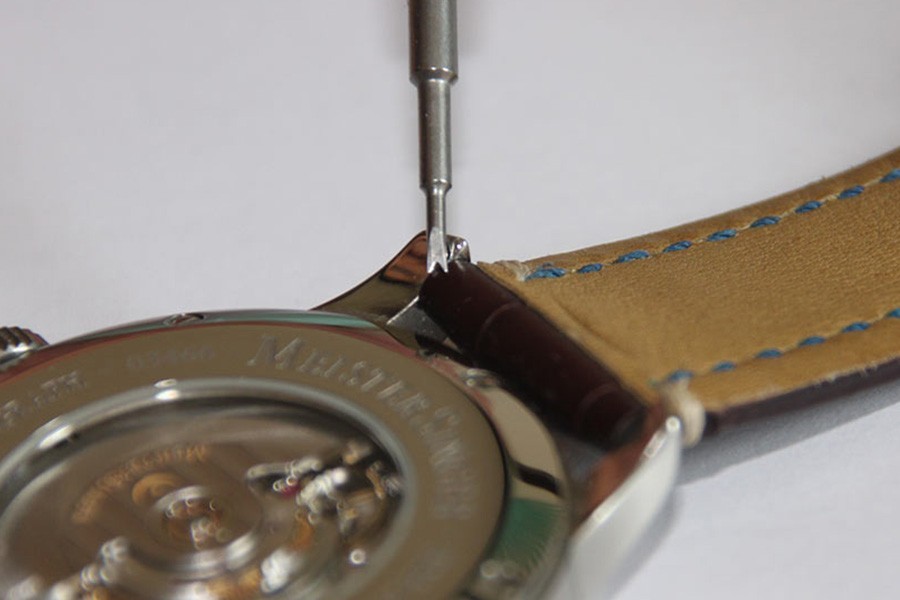
If your watch still carries its steel or leather strap, it must come off first. This step needs a fine-forked tool — the Bergeon 6767F tool is the professional reference, and the one we use in the workshop.
Keep the spring bars: they will hold the NATO. If they are bent or oxidised, replace them with stainless steel bars of the same size.
The full method, for drilled and solid lugs alike, is covered on video in our guide: removing a watch strap.
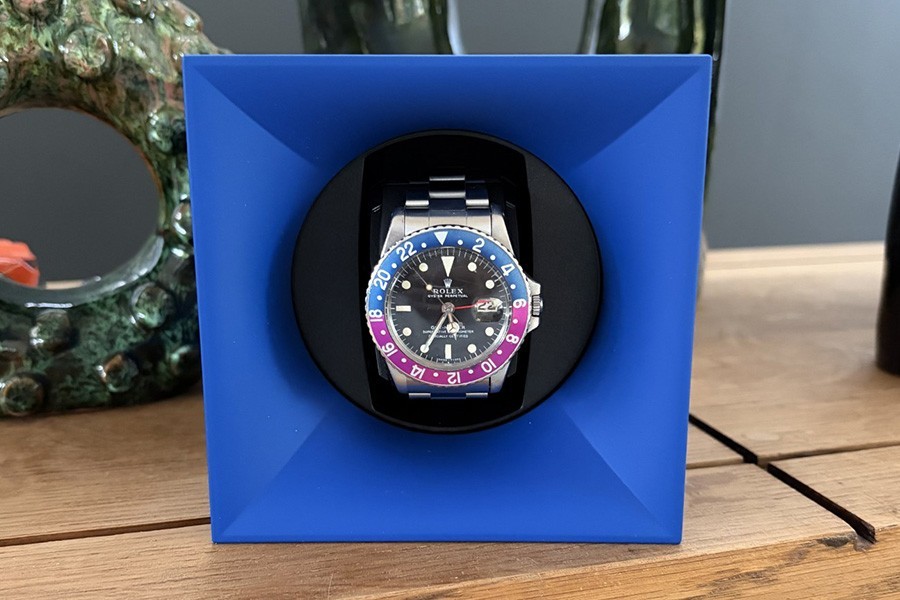
Fitting a NATO strap to a Rolex GMT-Master
A NATO fits differently from a conventional strap. Here is how to proceed.
Video demonstration: removing the steel bracelet and fitting a NATO on a Rolex GMT
Step by step
- Fit both spring bars into the lugs, at 12 and 6 o'clock.
- Hold the NATO buckle up, with the short flap facing the watch.
- Feed the tip of the long section in from above, between the 12 o'clock bar and the case.
- Run it under the case, then between the 6 o'clock bar and the case.
- Pull until the case sits centred on the strap, with the buckle staying at 12 o'clock.
- Lock the case: pass the tip through the metal ring of the short flap. The watch no longer slides along the nylon.
- Check that both bars are properly seated in the lugs.
The watch then rests on two passes of nylon. This is what gives the NATO its pass-through security: even if one spring bar were to fail, the watch would remain held on the wrist by the second pass.
Adjusting the NATO strap on the wrist
- Place the watch on your wrist and close the buckle in the hole that suits you.
- Slide the excess through the stainless keepers, then tuck the tip into the last keeper.
- If the excess is still long, fold it back on itself once before passing it through the keepers. The nylon is not cut.
A well-adjusted NATO leaves room for one finger between the nylon and the wrist. Too tight, it marks the skin; too loose, the watch turns.
Fitting a NATO strap to a dive watch
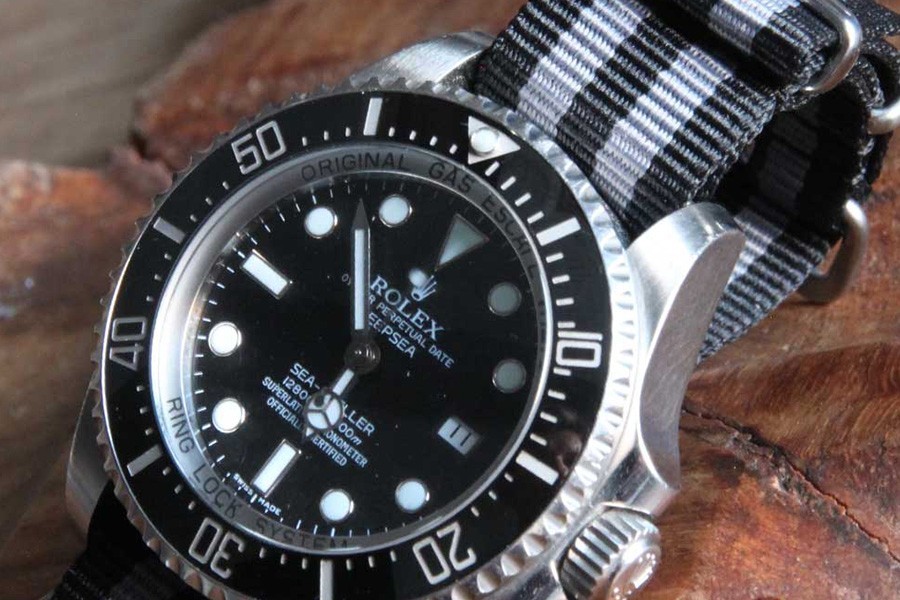
On a dive watch — Omega Seamaster, Seiko Prospex, Tudor Black Bay — the method is the same, but a few points deserve attention.
Video demonstration: fitting a NATO to a dive watch
Points specific to dive watches
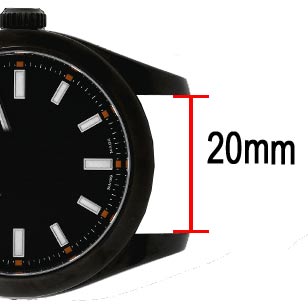
- 20 or 22 mm depending on the model — always check the lug width before ordering
- The thicker case, screw-down back or double back, makes the nylon a little tighter to pass at first. That is normal; the nylon softens with use.
- Curved lugs, on the Omega Seamaster in particular, call for slightly more care when engaging the bars — take the time to centre properly
- On watches rated to 200 m and beyond, a NATO can be worn diving. That is one of its historic advantages.
Which NATO strap width should you choose?
The strap width must match the lug width of your watch exactly — the distance between the two lugs of the case, in millimetres. An error in width makes fitting impossible.
- NATO 18 mm — vintage watches, dress watches, classic chronographs
- NATO 20 mm — Rolex Submariner, GMT-Master, Omega Seamaster and Speedmaster, Hamilton Khaki Field, Seiko SKX
- NATO 22 mm — modern large-diameter dive watches, Jaeger-LeCoultre Master Compressor
- NATO 24 mm — Panerai, large military watches
If in doubt, our watch strap size guide gives the lug width of 272 watches from 47 brands.
FAQ — Fitting a NATO strap
Which way round does a NATO strap go?
The buckle sits at 12 o'clock, the tip of the long section at 6 o'clock. The short flap lies under the case, and its ring locks the watch in place.
Do I need a special tool to fit a NATO strap?
To remove the original strap, yes: a fine fork is strongly recommended to avoid scratching the case. To fit the NATO itself, no tool is needed — it goes on by hand.
Can a NATO be fitted without removing the spring bars?
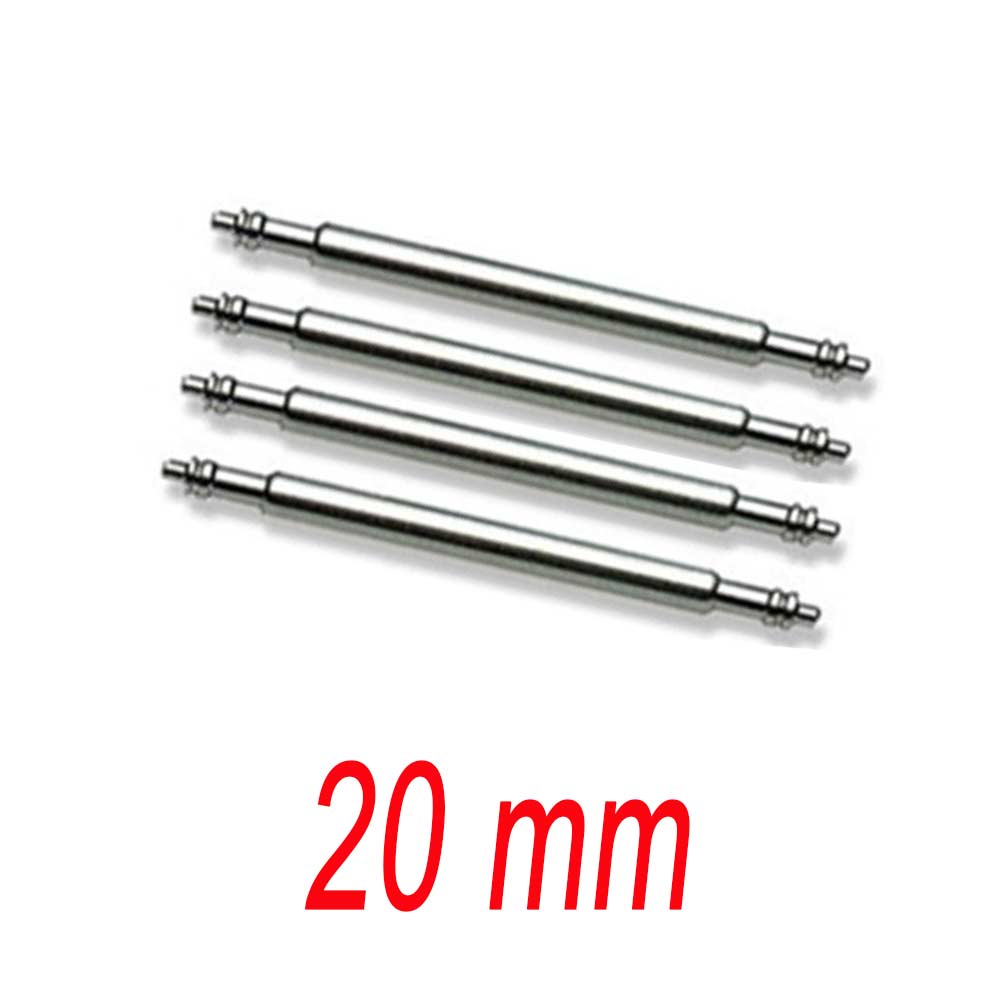
No. The bars hold the NATO in the lugs. They must be taken out of the previous strap and reused. If they are bent or rusted, replace them with stainless steel bars of the same size: a 20 mm watch takes 20 mm bars.
Does a NATO strap come off easily?
Yes, and that is one of its great advantages: a NATO slides off without any tool, with the spring bars left in place. Many collectors rotate between several NATO straps according to the outfit or the season.
My NATO strap is too long, what should I do?
Our NATO straps are 280 mm long and suit wrists of roughly 15 to 20 cm. The excess slides through the stainless keepers, with the tip tucked into the last one. No cutting is necessary or advisable.
Can a NATO be fitted to any watch?
To any watch with standard spring bars, which covers the great majority of the market. Watches with an integrated bracelet — Royal Oak, Nautilus, Overseas — are not compatible with a standard NATO.
Is a NATO strap suitable for diving?
Yes, on a suitably water-resistant watch. Woven nylon resists seawater, dries quickly and does not deteriorate with repeated immersion.
Our NATO strap selection
All NATO straps NATO 18mm NATO 20mm NATO 22mm NATO 24mm Marine Nationale
NATO James Bond black grey 20 mm · NATO black nylon 20 mm
Going further:
Removing a watch strap — video guide
The history of the NATO strap
How to choose a watch strap — size guide
Follow La Boîte à Montres on social media:


All our videos on our La Boîte à Montres YouTube channel.
About the author
Written by Sébastien Villeroy, founder of La Boîte à Montres in 2010. The products featured in our guides are handled, tested, photographed and filmed by our team.